Top 5 Challenges to Expect When Subdividing in Auckland
Overcoming the Real Challenges of Subdividing in Auckland
Key Takeaways
- Infrastructure capacity and technical servicing requirements now act as the primary constraints on project viability.
- Auckland Council estimates baseline subdivision costs between $120,000 and $150,000, though market reality often sits higher.
- Hazard overlays and Plan Change 120 have significantly altered development potential for thousands of properties.
- Successful projects require a proactive approach to engineering, vehicle access, and Section 92 information requests.
- Strong population growth and dwelling demand continue to support well-planned developments in the region.
The Critical Role of Infrastructure and Servicing
Current subdivision projects in Auckland face their greatest hurdles in infrastructure capacity, overlays, and increasingly complex council standards. While many landowners start the journey by looking at the size of their backyard, we find that the underground assets and regulatory constraints usually determine the final outcome. The landscape for development has shifted, requiring a more technical and prepared approach than in previous years.
Auckland Council estimates that an average two-lot subdivision can cost around $120,000 to $150,000 for an approved consent, a new certificate of title, professional fees and infrastructure requirements. This figure serves as a useful baseline for landowners to set their initial expectations. However, in our experience, the final budget often depends on the specific site constraints and the quality of the initial feasibility work.
Engineering requirements frequently pose the most significant risk to a project's budget and timeline. Every new lot must have its own independent connections for wastewater, stormwater, and potable water. We often see projects stall when landowners discover that the nearest public connection is located across a neighbour's property or requires a significant upgrade to the existing network.
The costs for these works have risen steadily. For site works and infrastructure, typical 2026 costs include approximately $27,000 per lot for a Watercare connection, which covers the water meter and associated infrastructure. Furthermore, you should budget about $30,000 for stormwater and wastewater drainage and roughly $28,000 for a Vector power upgrade on multi-lot developments. These figures demonstrate why a site that looks easy on the surface can quickly become a high-capital investment once the ground is broken.
Servicing constraints remain one of the most common reasons subdivisions are delayed or declined in the current environment. According to industry insights from Fluker, every subdivision must address vehicle access, legal rights of way, and the provision of telecommunications alongside the core three-water services. If these elements are not addressed comprehensively in the initial application, the risk of a project being turned down increases significantly.
Navigating the Auckland Unitary Plan and PC120
The rules governing how much you can build and where are found in the Auckland Unitary Plan (AUP). This document sets out the Auckland Unitary Plan minimum lot sizes for various zones, such as 600m² for Single House zones and 400m² for Mixed Housing Suburban. While these numbers provide a starting point, the introduction of Plan Change 120 (PC120) has added a new layer of complexity regarding natural hazards.
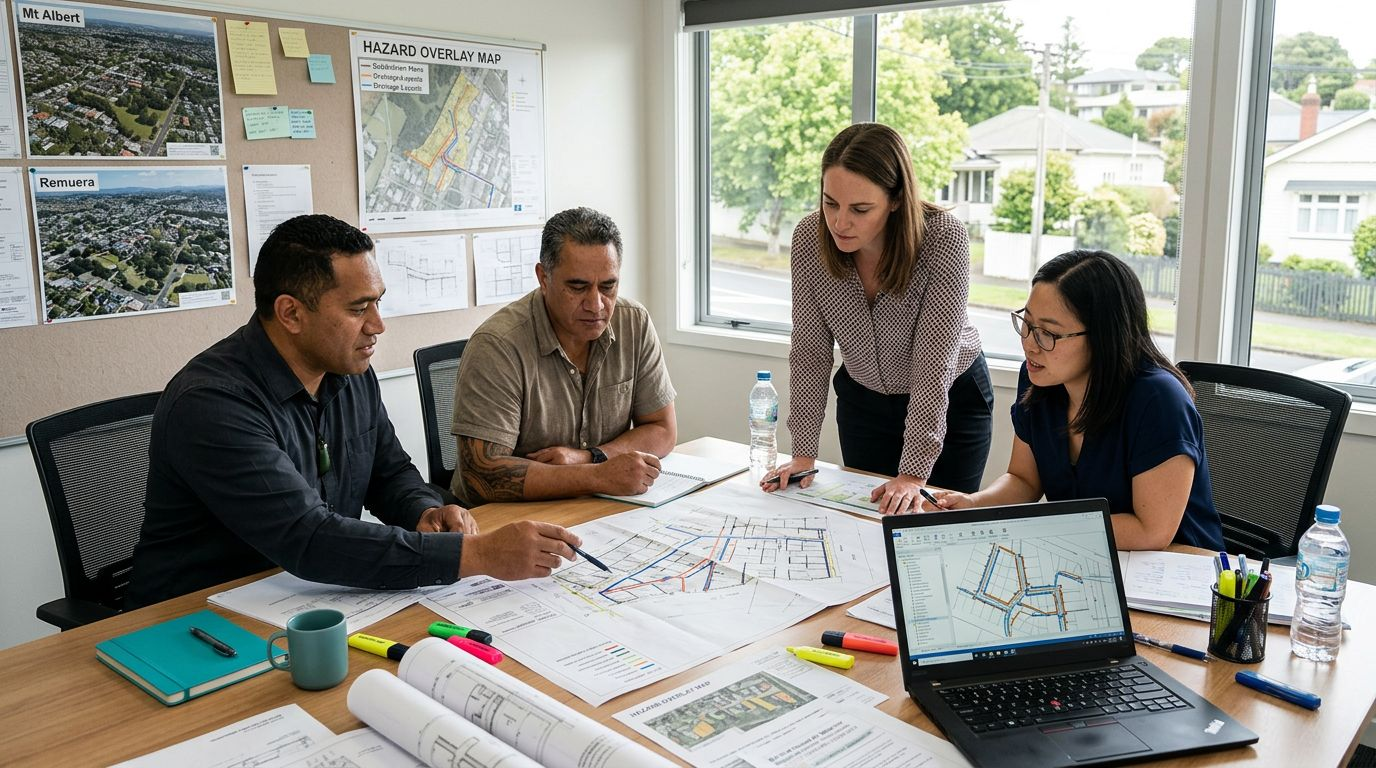
Recent data indicates that around 12,000 Auckland properties were downzoned under PC120 because they sit in areas identified for flood, coastal erosion, coastal inundation, or landslide risk. If your property falls within one of these hazard overlays, the path to subdivision may become much narrower. We've seen this happen when a site that previously appeared to have high density potential is suddenly restricted due to its proximity to a flood plain or an unstable slope. Identifying these overlays during the feasibility stage is the only way to avoid a costly mistake.
In Auckland, most subdivisions occur “around an approved development”. In these cases, the minimum lot sizes in the Unitary Plan do not apply. Rather, you must demonstrate that your proposed subdivision boundaries are well aligned to the approved development, such as building footprints, vehicle access and any zone controls such as outdoor living spaces or coverage standards.
Budgeting for the Reality of 2026
While the council provides a baseline, market guidance for 2026 suggests that all-in subdivision costs often land between $140,000 and $190,000 per lot before construction begins on straightforward sites. This range accounts for the rising costs of professional fees, physical works, and the various levies required to bring a new title to life. For more complex projects involving multiple dwellings, total costs including the build can easily reach between $500,000 and over $1,000,000.
Council fees also represent a significant upfront commitment. For a standalone subdivision consent, such as a vacant lot or cross-lease conversion, the current Council deposit fees typically range from $2000 to $5000. If you choose to bundle your subdivision with a land use consent for new buildings, the deposit fee increases to between $9500 and $12,000. These are just the initial deposits: the final council bill will reflect the actual time spent processing the application.
Managing the Consent Process and RFIs
The statutory timeframe for a non-notified resource consent is 20 working days. However, the reality of the Auckland Council process often involves the use of Section 92 requests for further information (RFIs). These requests effectively pause the clock while the applicant gathers more data or technical reports. We find that Section 92 RFIs can effectively double the processing time to 40 working days or more if the initial application lacks detail. The Council is also routinely doubling their processing timeframes, irrespective of any time spent on s92s.
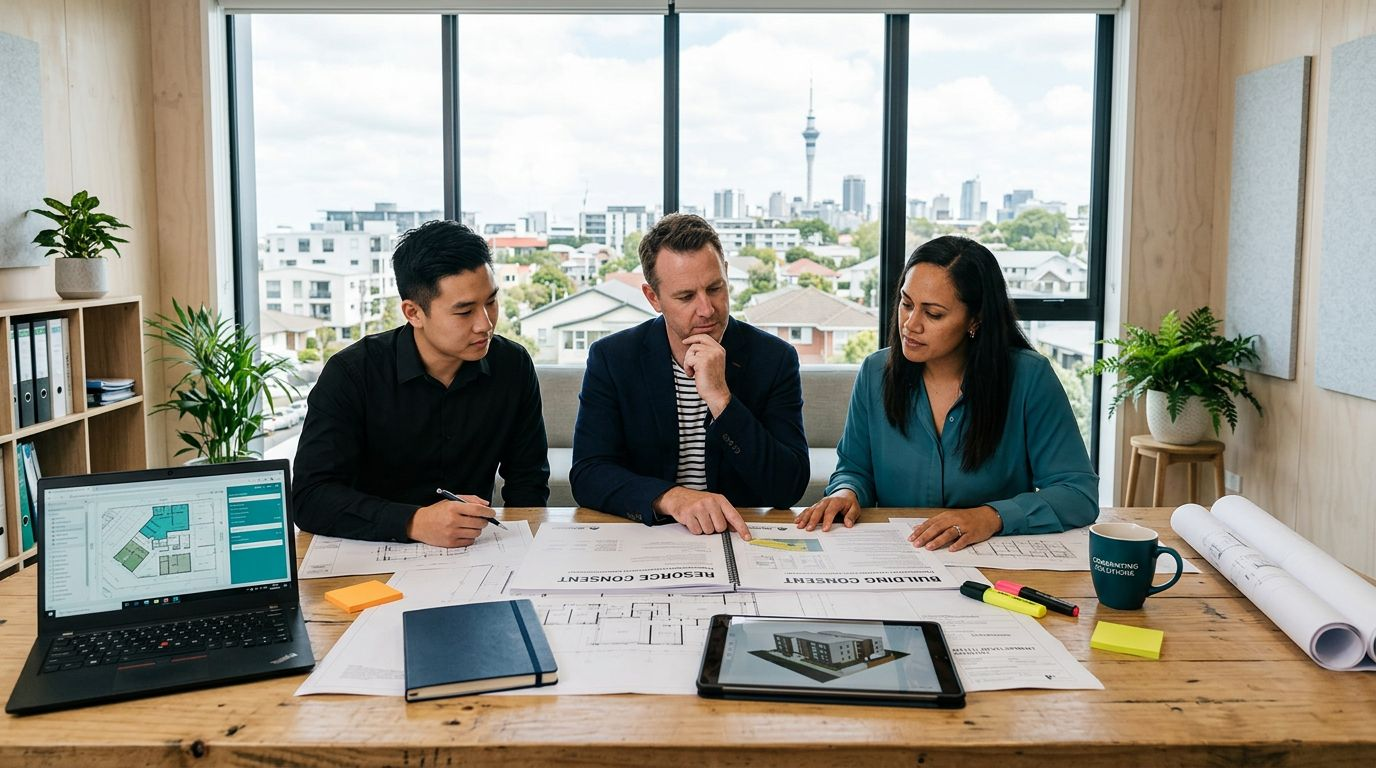
Our role involves preparing high-quality Assessment of Environmental Effects (AEE) reports that anticipate these questions before they are asked. By coordinating with engineers and surveyors early, we aim to provide a complete picture that allows council planners to move through the approval process with fewer interruptions. A well-prepared application is the best defence against the "gotchas" that can derail a project's timeline.
The End Goal: Section 223 and 224(c)
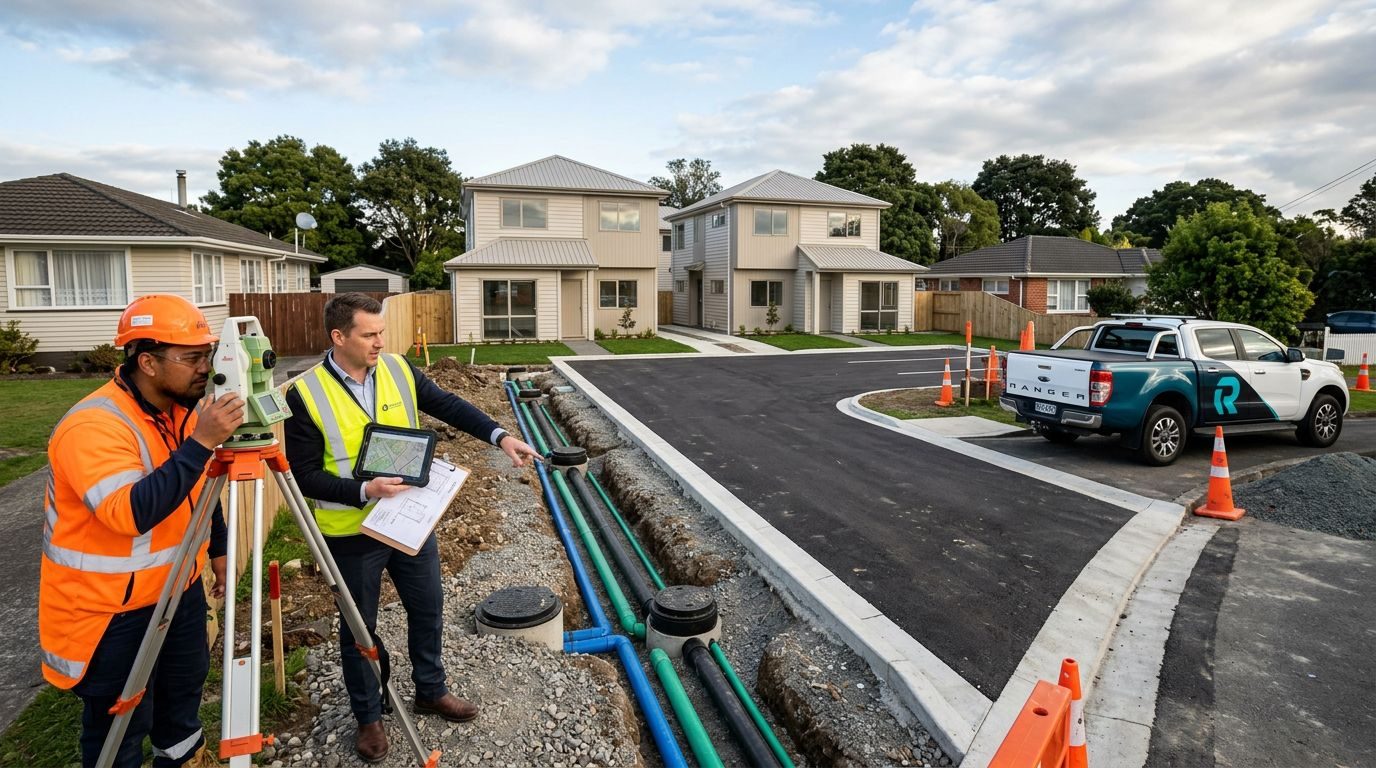
Obtaining the initial resource consent is only the first major milestone. To actually get a new certificate of title, you must satisfy the conditions set out in the consent through the s223 and s224(c) process. Section 223 involves the approval of the survey plan, while Section 224(c) is the final sign-off confirming that all physical works, such as drainage and driveways, have been completed to the required standard.
This stage is where the physical reality of the project meets the legal requirements. Whether you are doing a unit title, a vacant lot subdivision, or a cross-lease conversion, the final certificate of title is only issued once the council is satisfied that all infrastructure is in place and all development contributions have been paid.
This part of the process is usually led by your surveyor.
Strategic Planning in a Growing Region
Despite the technical challenges and the capital required, the demand for new housing in Auckland remains a powerful driver for development. In the year ending April 2025, 13,719 new dwellings were consented in the Auckland region, reflecting a continued commitment to urban growth. This activity is supported by significant population increases, with suburbs across South Auckland alone growing by approximately 27,300 people since 2018.
The opportunity for subdivision is still very much alive for those who approach it with a clear understanding of the risks. By focusing on rigorous feasibility and addressing infrastructure and regulatory hurdles upfront, developers can unlock the value of their land while contributing to the region's housing needs. We believe that a proactive, solution-focused approach is the key to navigating the complexities of the Auckland planning environment and achieving a successful project outcome.
If you are contemplating a subdivision, please get in contact via [email protected]. We provide free advice up to 30 minutes.