Resource Consent vs. Building Consent: What's the Difference and When Do You Need Each?
Resource Consent vs Building Consent in Auckland: Knowing the Difference
Key Takeaways
- Resource consents focus on the environmental effects and site usage under the Resource Management Act.
- Building consents ensure structures meet the New Zealand Building Code for safety and durability.
- Auckland Council often requires both consents for a single project, and one does not replace the other.
- Missing a resource consent can lead to a Section 37 notice, which stops building work even if a building consent is granted.
- Professional planning advice early in the process helps manage costs and prevents expensive redesigns.
Navigating the Auckland property market requires more than just a good eye for a site: it requires a clear understanding of the rules that govern what you can build. We see many property owners and developers get caught out by the assumption that a building consent is the only hurdle to clear. In reality, the consenting process in New Zealand is a two-part system. One side manages the impact on the land and the community, while the other ensures the physical structure is safe to inhabit.
The scale of development in our region makes this distinction more important than ever. With smaller sites now being developed, there is less room for error, and more rules that may come into effect and apply to your development.

Defining the Two Consents: RMA vs Building Act
To understand the difference, we look at the legislation behind them. A resource consent is a formal approval from the council to carry out an activity that might affect the environment or is not a permitted activity under the Auckland Unitary Plan. We define this as the "what and where" of your project. It is governed by the Resource Management Act 1991 (RMA) and looks at things like building height, proximity to boundaries, heritage rules, and how your project affects your neighbours. You can find more detail on these requirements on our Urban Planning Consultants home page.
A building consent, on the other hand, is governed by the Building Act 2004. This is the "how" of your project. It focuses on the technical aspects of construction: structural integrity, fire safety, plumbing, and moisture control. It may also include rules that apply to the use of the site, such as accessible parking or rules around access for emergency services that have an impact on how sites are developed or laid out.
As noted in Sonder Architecture’s 2026 building consent guide, this process ensures every building meets the New Zealand Building Code.
While a resource consent looks at how a new apartment block affects the local skyline if it exceeds the height limits, the building consent ensures that the same block won't fall down in an earthquake or leak during a storm.
The Real-World Costs and Timeframes in 2026
In our experience, budgeting for consents involves more than just the professional fees of your architect or planner. You must also account for the deposits required by Auckland Council. For a standalone land use or subdivision consent, the council deposit is around $6500.
If your project is more complex and requires several resource consents bundled into one application, that deposit rises to around $12,000. We provide a full breakdown of these costs in our guide on navigating the Auckland resource consent maze.
Building consent fees also vary based on the scope of work. Current data from Sonder Architecture suggests that an internal renovation with no structural changes might cost between $2,000 and $4,000 in council fees. A bathroom or kitchen renovation with plumbing changes typically ranges from $3,000 to $5,500. For larger projects, such as a single storey extension under 60 square metres, you should budget between $5,000 and $8,000. A new two storey home often exceeds $15,000 in building consent fees alone.
Timeframes are another critical factor. While the statutory timeframe for a building consent is 20 working days, the reality in Auckland is often closer to 30 or more working days. Resource consents face similar pressures. While the statutory limit is 20 working days for non-notified applications, we often see Auckland Council taking up to 40 working days to process these due to the high volume of applications. This makes early engagement with a planner essential to keep your project on track.
The Danger of the Section 37 Tag
A common mistake we observe is property owners applying for a building consent before they have secured their resource consent. While you are allowed to do this, it carries a significant risk. If the council determines that a resource consent is required but has not yet been granted, they will issue a notice under Section 37 of the Building Act. This "tag" stays on your building consent and legally prevents you from starting any physical work on site.
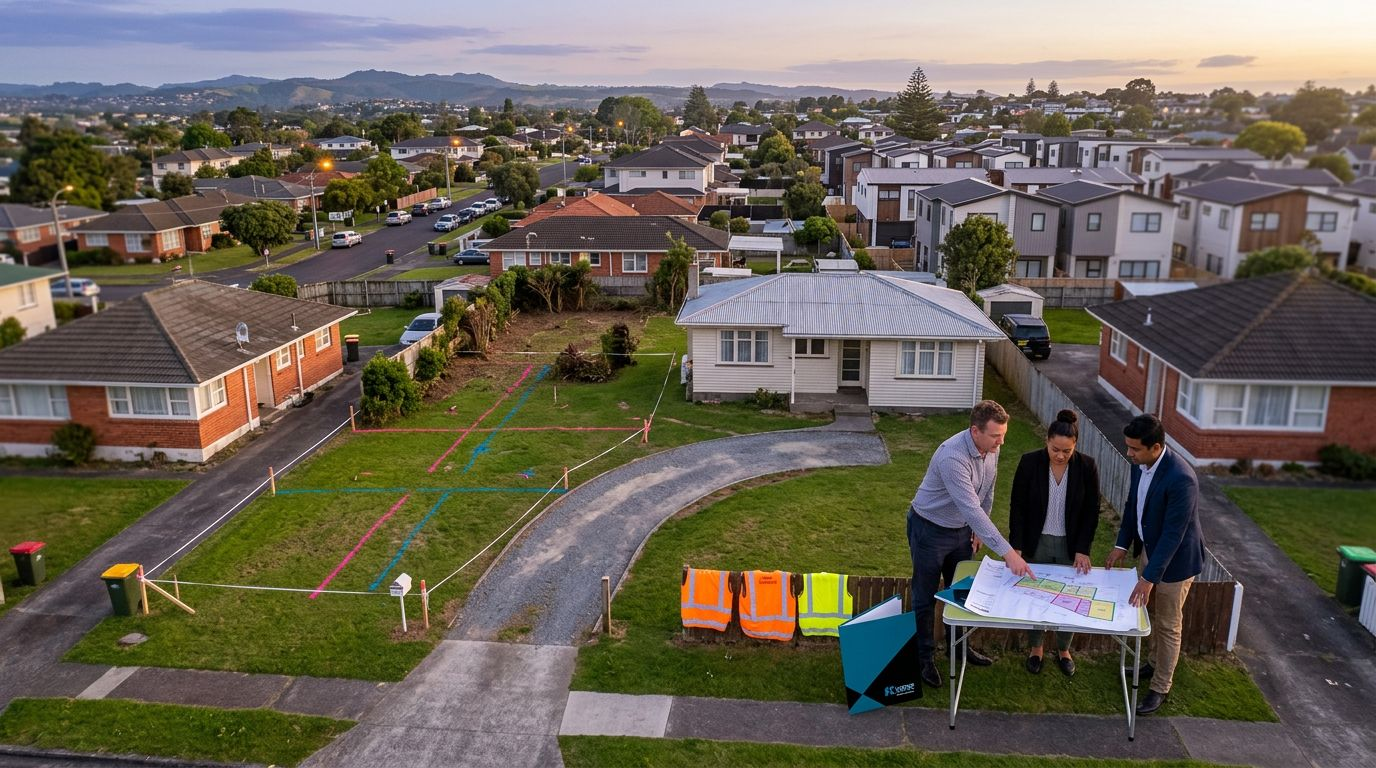
Imagine a developer in Mount Albert who has their building consent approved for a new minor dwelling. They have their builders ready to go, but because the project slightly exceeds the site coverage rules in the Auckland Unitary Plan, they still need a resource consent. The Section 37 notice means the builders cannot hammer a single nail until the resource consent is issued. This leads to stalled projects, holding costs, and frustrated contractors. We help clients avoid this by identifying these triggers early through our range of planning services.
Remember that if changes are required as part of the resource consent, you may need to apply to amend your already issued building consent to match causing more costs and delays.
The 70 Square Metre Exemption: A Trap for the Unwary?
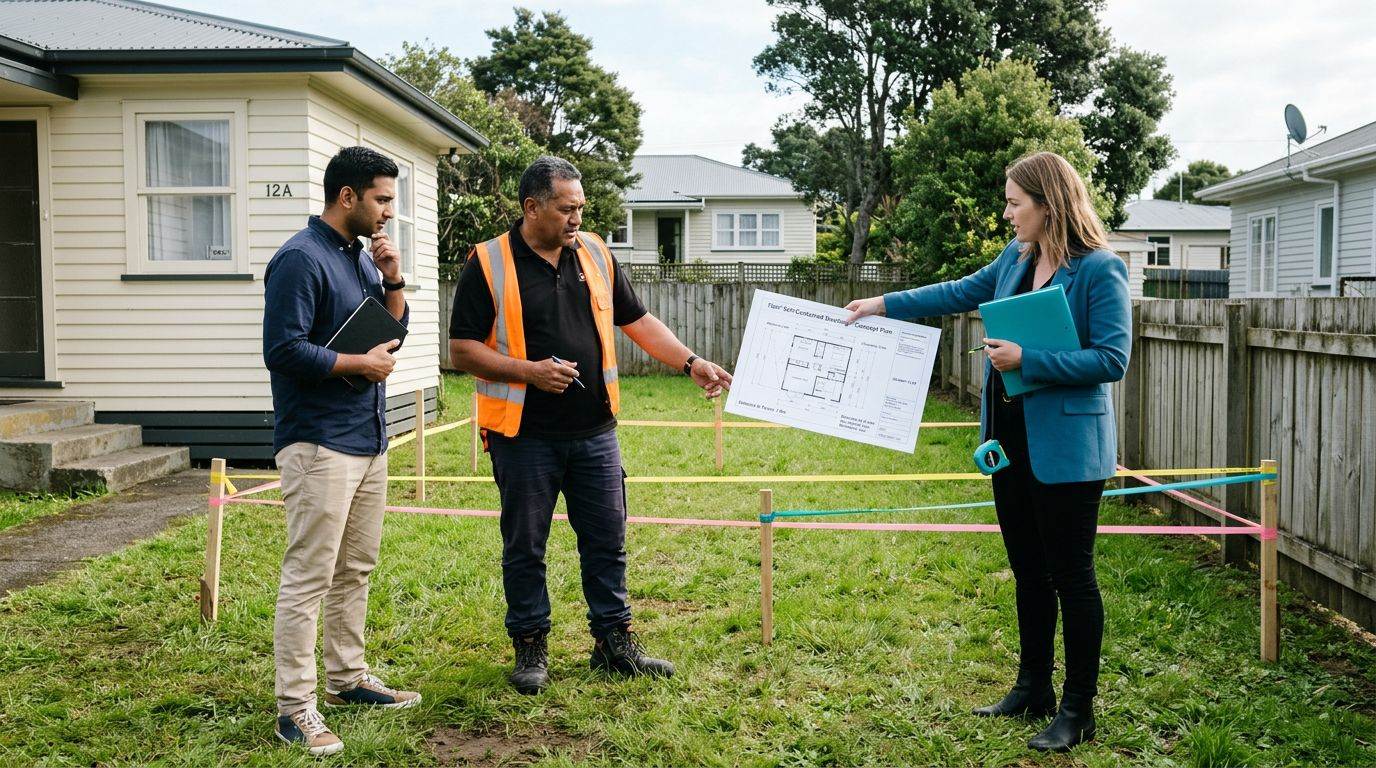
Recent changes to the building consent rules have introduced some flexibility for smaller projects. As of 15 January 2026, a new, single storey, self contained dwelling up to 70 square metres can be built without a building consent under specific conditions. These include a maximum height of 4 metres and ensuring the floor level is no more than 1 metre above the ground. The structure must also be at least 2 metres clear of boundaries and other structures.
However, this exemption only applies to the building consent. Even if you don't need a building consent for a 70 square metre "granny flat," you may still require a resource consent.
If your property is in a heritage overlay, a flood zone, or you are in a rural zone where private wastewater and water supply are likely, a resource consent will still be required. We've seen cases where people assume "no building consent" means "no council involvement," only to face enforcement action later because they ignored the planning rules.
You can read more about these regional challenges in our article on Auckland's urban development landscape.
How We Help You Navigate the Auckland Council Maze
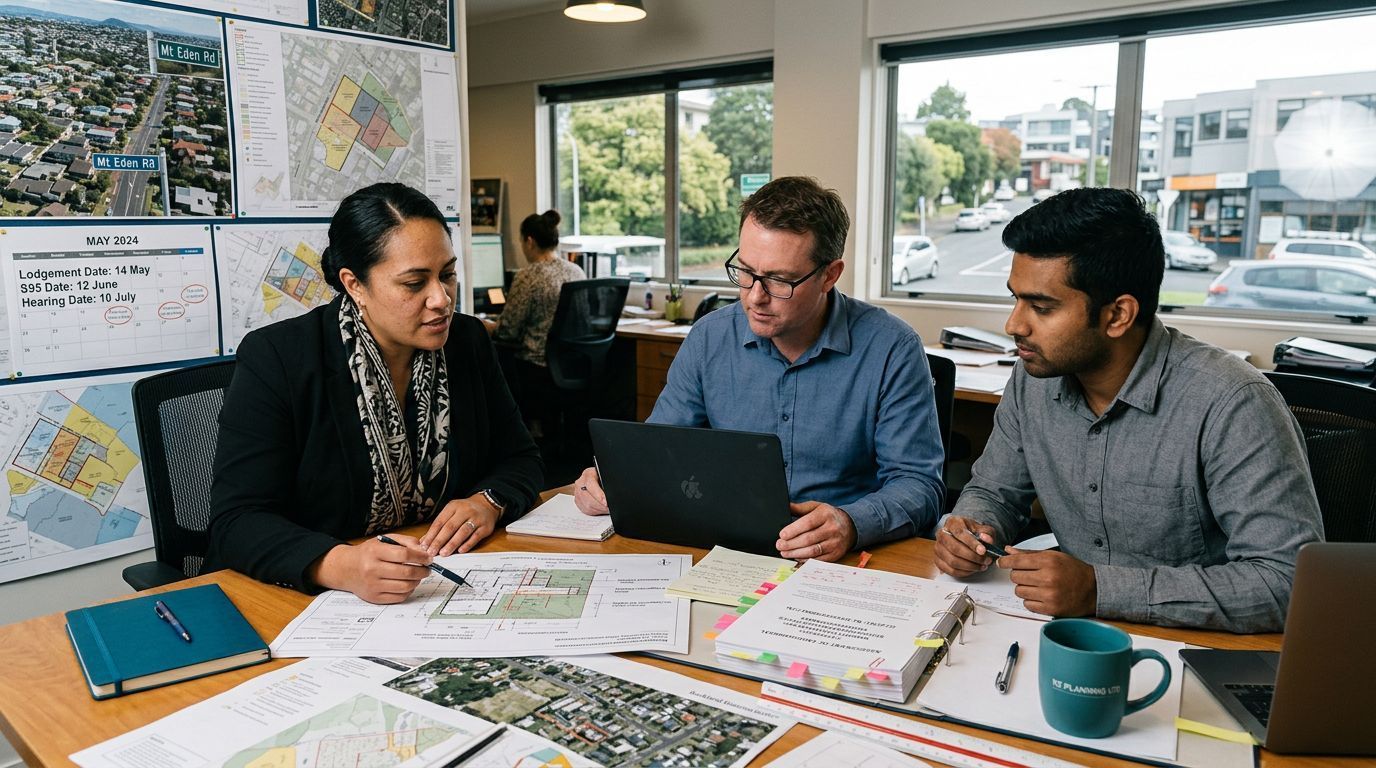
Our role as urban planning consultants is to act as your first phone call. We look at your plans through the lens of the Auckland Unitary Plan to see if your project is a "permitted activity." If it isn't, we manage the resource consent process for you. This includes preparing the Assessment of Environmental Effects (AEE), which is a document that explains how your project will manage its impact on the surrounding area. We can also give you early advice on the preliminary design and recommend changes to ensure a smooth process through the Council.
By getting the resource consent strategy right from the start, we provide the certainty your architect needs to finalise the building consent plans. This collaborative approach prevents the need for expensive redesigns halfway through the process. Whether you are adding a deck that exceeds height limits or planning a multi unit development, we provide the honest, frank advice needed to get your project across the line. Clear planning is the most effective way to protect your budget and your timeline in Auckland's busy construction environment.