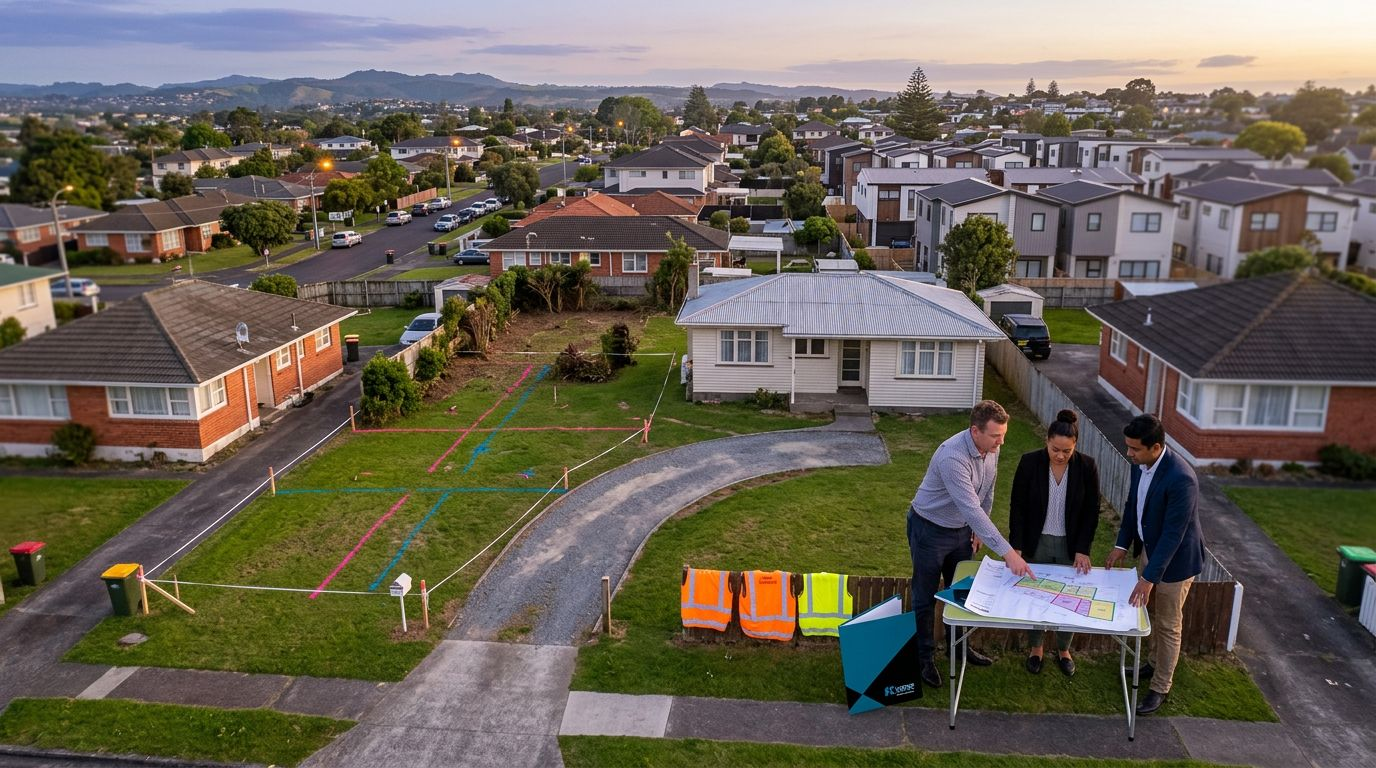
5 Common Mistakes That Delay Resource Consent Applications (And How to Avoid Them)
Avoid Common Mistakes in Your Resource Consent Application in Auckland
Key Takeaways
-
Auckland Council routinely takes up to 40 working days to process non-notified consents due to high application volumes.
-
Incomplete applications trigger Section 92 requests which stop the statutory processing clock and cause significant project delays.
-
A high-quality Assessment of Environmental Effects (AEE) is the most effective tool for reducing council information requests.
-
Identifying all relevant Auckland Unitary Plan (AUP) overlays and rules before lodgement prevents the need for costly redesigns.
-
Engaging affected parties early can prevent an application from moving into the much longer notified processing pathways.
Navigating the path to a successful resource consent in Auckland often feels like a test of patience. We have seen many otherwise viable development projects slowed down not by complex planning issues, but by avoidable mistakes during the initial application phase. Whether you are looking to build a minor dwelling in Henderson or a multi-unit development in Grey Lynn, the quality of your documentation determines your timeline. The Resource Management Act (RMA), which is the primary legislation governing how we manage our environment in New Zealand, sets out specific timeframes for council decisions. For a standard non-notified application with no hearing, the councils have 20 working days to make a decision once an application is accepted. However, the reality on the ground is often quite different.
In our experience, the sheer volume of development in Auckland means that the statutory clock is rarely the final word. According to our own data and observations of the local market, Auckland Council is routinely doubling these timeframes to 40 working days. This means you should plan your projects based on this longer timeframe to avoid financial strain. A well-prepared application is the single most important factor in achieving a smooth and timely approval. When errors occur, they often lead to a Section 92 request, which is a formal demand for further information. This mechanism pauses the 20-working-day processing period until a response is received, effectively stopping the clock on your project. When this happens the Council is likely to cause even further delays to the process in reviewing the information, with s92 reviews routinely taking up to two weeks. Understanding the most common pitfalls is the first step toward securing your complete guide to the Auckland resource consent process and keeping your project on track.
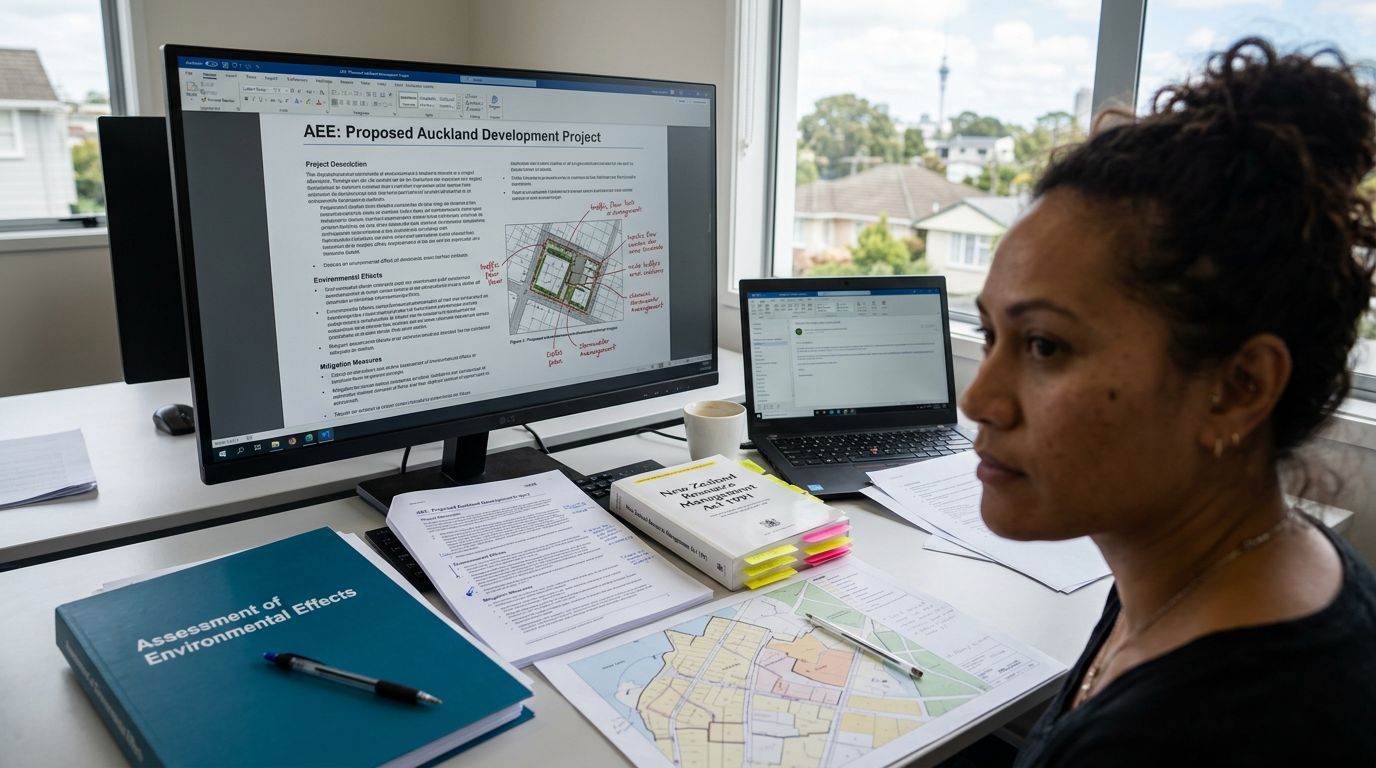
The High Cost of Incomplete Assessments
A thin or poor-quality Assessment of Environmental Effects (AEE) is perhaps the most frequent reason for delays. An AEE is a document that explains the potential impacts of your proposed activity on the surrounding environment and how you plan to manage those impacts. Many applicants treat the AEE as a box-ticking exercise rather than a persuasive legal argument. When the information provided is vague or misses key environmental risks, the council is forced to issue a Section 92 request to fill the gaps. We have found that providing a high-quality Assessment of Effects (AEE) reduces the amount of information that Council may require and generally speeds up the process.
A good quality AEE specifically addresses the objectives and policies of the relevant zone and any relevant assessment criteria. If you are applying for a land use consent, which is a type of resource consent required when you want to use your land in a way that is not permitted by the local plan, your AEE must be comprehensive. It needs to cover everything from traffic generation and noise to visual privacy for neighbours. A common mistake we observe is failing to provide enough detail on how construction noise will be managed or how stormwater runoff will be handled. By front-loading this information, you demonstrate to the council that you have considered the local environment seriously, which builds trust and reduces the likelihood of the processing clock being stopped for weeks.
A good quality AEE means that the Council can simply adopt the assessment they agree with, and only focus on any areas where their may be disagreement. This speeds up the process and should save you when it comes to Council's processing costs, which are invoiced on an hourly basis.
Inaccurate or Inconsistent Plans
Consistency between your architectural drawings and your specialist reports is vital. We often see applications where the site plan shows a certain level of earthwork, but the engineering report describes a completely different volume of soil being moved. Earthwork refers to the disturbance of land surfaces by moving, removing, or placing soil or rock. When these documents contradict each other, the council planning officer cannot accurately assess the scale of the activity. This inconsistency triggers an immediate request for clarification, adding at least two weeks to your timeline while your consultants revise their work.
Take a developer in Ponsonby, for example. If their architectural plans show a new dwelling that encroaches on a height-to-boundary rule, but the AEE claims the project is fully compliant, the application is technically incomplete. We thoroughly review plans to ensure that all consent reasons are identified before they ever reach the council desk. This involves checking that every measurement is precise and that every specialist report refers to the exact same version of the site plan. The Section 92 requests can delay projects by weeks or months due to this stop the clock mechanism, so ensuring your resource consent documents are perfectly aligned is a high-value investment of your time.
Urban Planning Consultants takes pride in thoroughly reviewing plans at the pre-lodgement stage to ensure completeness and that discrepancies between specialist plans are avoided. Not only does this allow an accurate AEE to be prepared, it substantially cuts down on s92 requests.
Ignoring Auckland Unitary Plan Overlays
The Auckland Unitary Plan (AUP) is the rulebook for development in our city, and it is far more complex than a simple set of zoning rules. It contains numerous overlays that apply to specific areas to protect things like volcanic viewshafts, significant ecological areas, or heritage character. Many property owners look at their basic zone, such as Mixed Housing Urban, and assume they know the rules. However, an overlay can add layers of restriction that completely change what is possible on a site. Failing to identify these overlays early is a recipe for a major project setback.
We have seen cases where a project was designed without considering a flooding overlay, only for the council to require a complete redesign after the application was lodged. This not only costs time but also thousands of dollars in additional design fees. Our team makes a point to thoroughly read the AUP criteria and ensure that the necessary technical reports are obtained before lodgement. This proactive approach is essential in Auckland’s urban development landscape, where the complexity of the rules can easily catch out the unprepared. Identifying every consent trigger, from regional consents for water discharge to local land use rules, ensures your application is robust from day one.
Underestimating the Impact of Section 92 Requests
What is a Section 92 request, and why do you need to avoid it? Essentially, it is the council’s way of saying your application is missing something important. Once the request is issued, you have a 15-working-day statutory period to respond or seek an extension. If you take the full 15 days to gather the information, you have already added three weeks to your project timeline. If the information you provide is still not sufficient, the council can come back again with the application remaining on hold.
In the Auckland context, we advise our clients to allocate an extra 3 to 4 weeks for potential Section 92 requests when planning major developments. This buffer accounts for the time it takes for your specialists, such as acoustic engineers or traffic consultants, to provide the necessary data. It also covers the time taken by Council to then review the information.
The best way to avoid this is to ensure the application is complete at the time of lodgement. This includes all necessary technical inputs and a clear explanation of how the proposal meets the Resource Management Act requirements. A successful resource consent is one that moves through the system without the clock ever stopping. Yes it is possible!
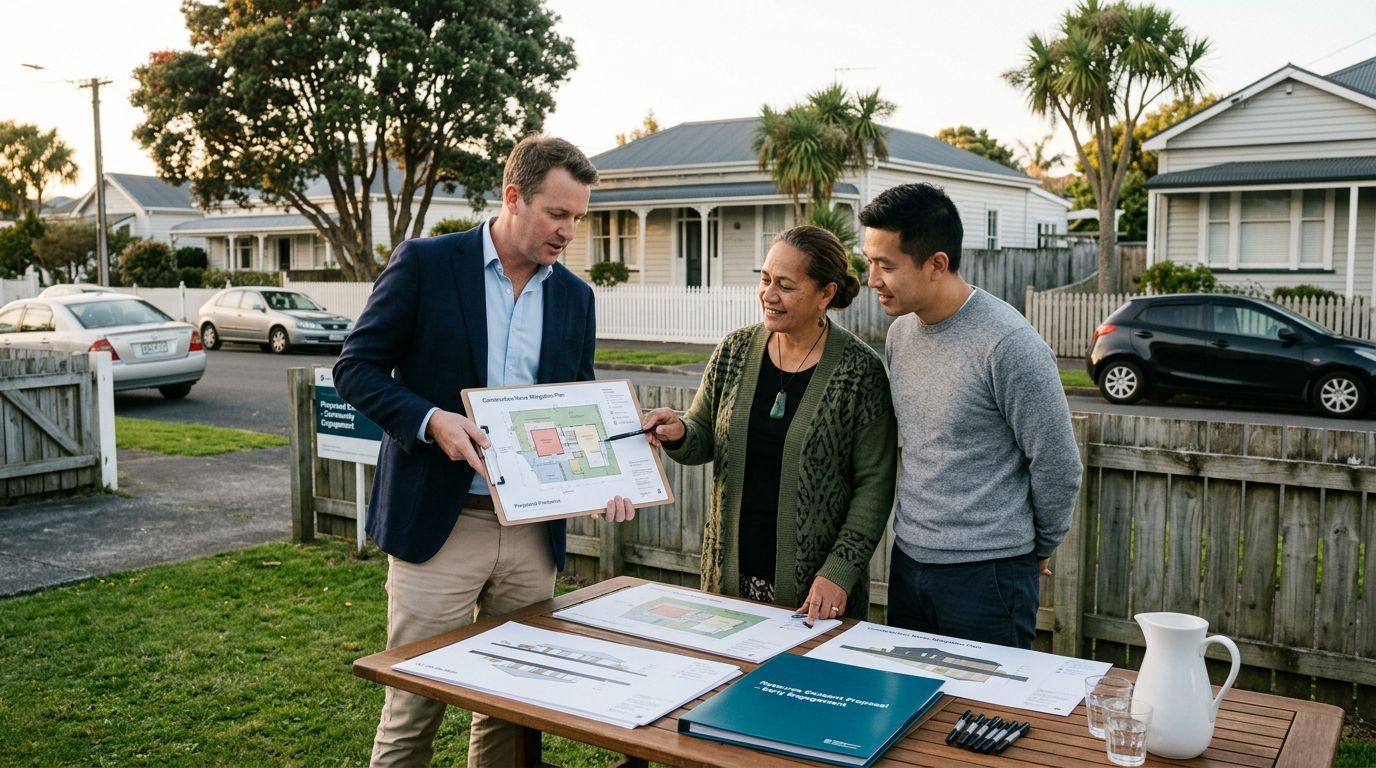
Failing to Engage Affected Parties Early
One of the most significant risks to any development is the possibility of your application being notified. Notification means the council informs the public or specific neighbours about your project and allows them to have a say. A standard non-notified process is relatively quick, but notified applications with hearings can take 100 working days for limited notification or 130 working days for public notification. These timeframes start from lodgement through to the final decision and can be devastating for a project’s budget.
Many developers try to avoid talking to neighbours in the hope that the council will decide the effects are less than minor. However, the RMA allows time limits to be deferred in order to gain approval from affected persons. If you can secure written approval from your neighbours before you lodge, the council is often able to process the application as non-notified, saving you months of uncertainty. We have found that early, honest communication with the people next door often resolves concerns before they become formal objections. This is particularly important when your project involves significant earthworks or changes to the streetscape that might affect the environment or the privacy of others.
Understanding the Financial Stakes
How much does a resource consent cost in Auckland? The answer depends heavily on the complexity of your project and how many different types of resource consent you need. Auckland Council requires a deposit at the time of lodgement, and these costs can vary significantly. For a standalone subdivision consent, which is the process of dividing a parcel of land or a building into separate allotments, the deposit is $5,000. For stand alone landuse consents the deposit starts at $6500.
For a bundled consent that includes a mixture of land use, subdivision, or regional permits, the council deposit is currently $12,000.
These are just the initial fees to get the council to start processing your application. If your application is poorly prepared and triggers multiple Section 92 requests, the final bill from the council will be much higher, as they charge for the additional time spent by planning officers and specialists. This is why we emphasise that the preparation of the application is where you can save the most money. By investing in professional planning advice up-front, you avoid the spiralling costs associated with delays and repeated information requests.
While we have had success in getting clients a fees rebate of up to 50%, even such discounts can result in a large bill still to pay at the end of the resource consent process.
The Path to a Successful Approval
Achieving a smooth resource consent process in Auckland requires a combination of technical knowledge and strategic planning. We believe that treating the council as a partner rather than an obstacle is the key to success. This starts with providing them with all the information they need to say "yes" the first time they look at your file. From ensuring your site plans are accurate to providing a detailed AEE that addresses every relevant AUP rule, every piece of the puzzle must fit perfectly.
We have seen that projects which are well-researched and professionally presented are far more likely to be processed within the 40-working-day practical timeframe. If you are feeling overwhelmed by the requirements of the Auckland Unitary Plan or the complexities of the Section 92 process, reaching out for expert help is a sensible move. Our focus is on identifying all consent triggers early and preparing a high-quality application that stands up to scrutiny. Whether you are dealing with land use consent or complex subdivision issues, the goal is always the same: a timely, cost-effective approval that lets you get on with your build. If you want to dive deeper into how the system works, we recommend reading our Auckland resource consent handbook for a full breakdown of the process from start to finish.